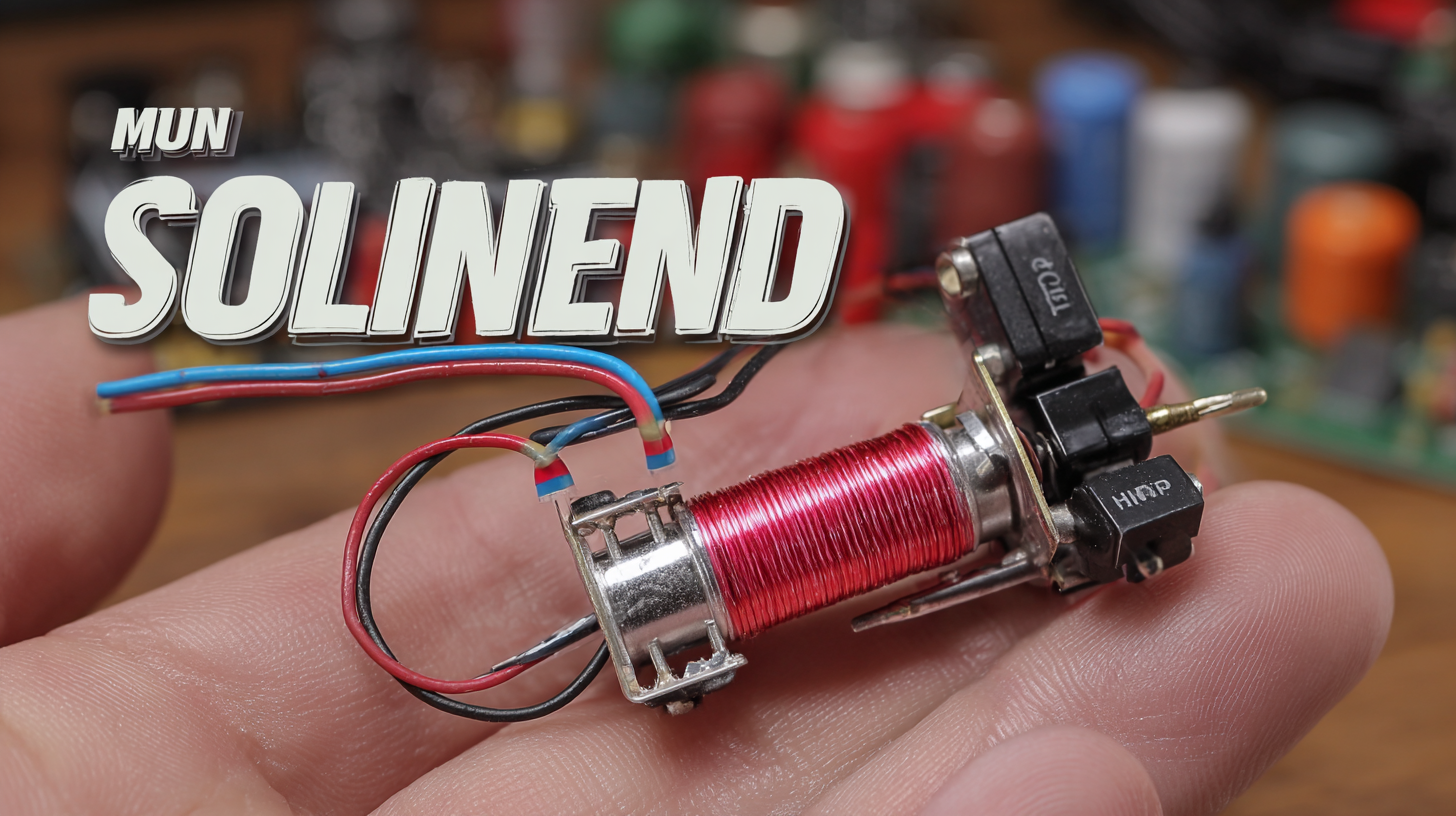
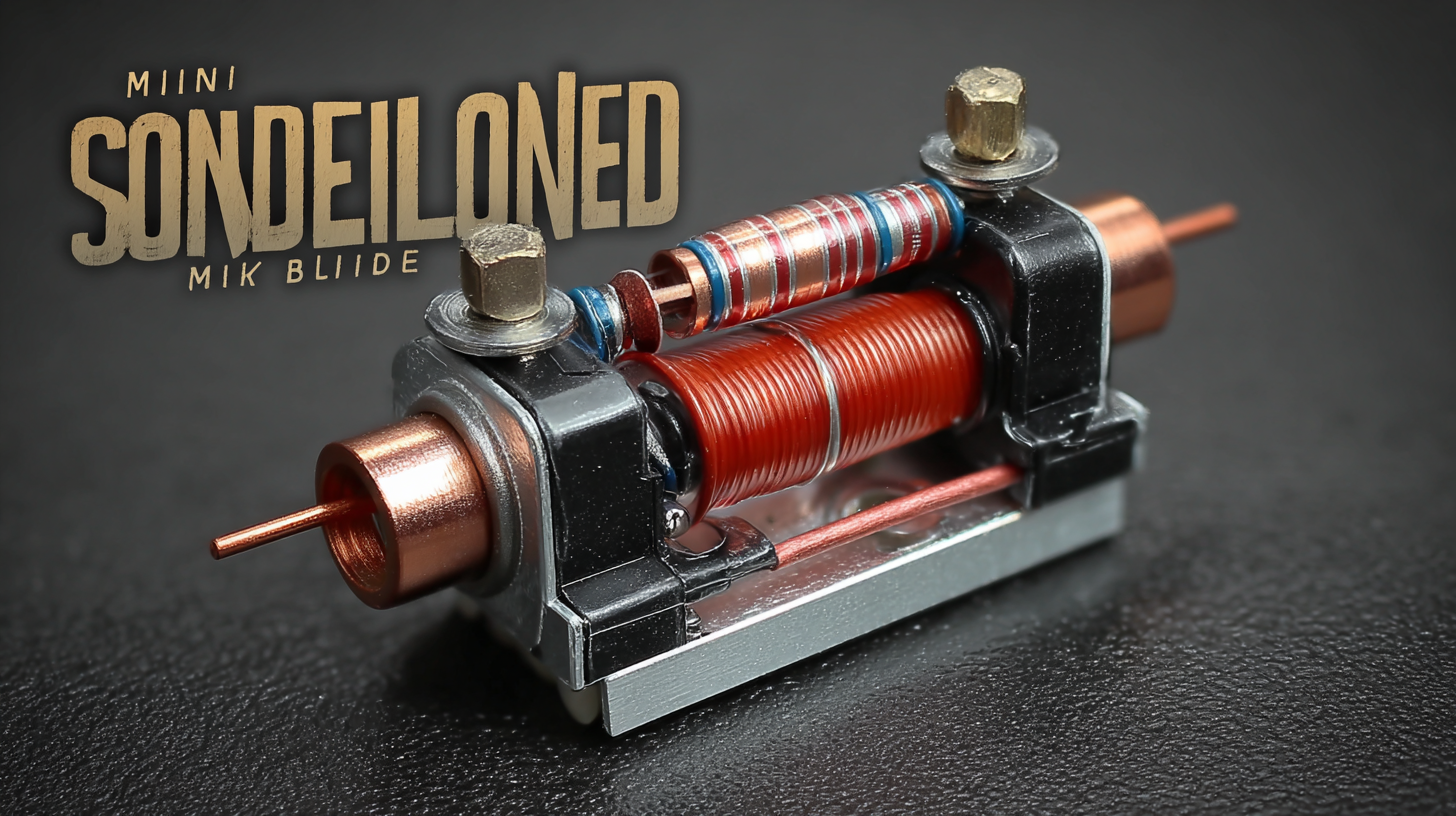
You know, in today’s engineering world, we can’t really underestimate the role of components like the Mini Solenoid. It’s pretty interesting—recent market research shows that the global solenoid market is expected to grow by about 4.5% annually from 2021 to 2026. That kind of growth really points to a rising demand for solenoid products across different industries. And let me tell you, Dongguan Asite Technology Co., Ltd. is leading the charge here. We offer a pretty impressive range of solenoids—think open frame, tubular, push-pull, holding, latching, and rotary types—all customized to fit our customers' unique needs. As we move beyond China and make our mark on the global stage, we’re all about quality. Our Mini Solenoid solutions aren’t just meeting industry standards, they're going above and beyond. This is all about enabling some cool innovations in automotive tech, smart door locks, and beyond, really boosting the functionality and efficiency of your projects. Isn’t that exciting?
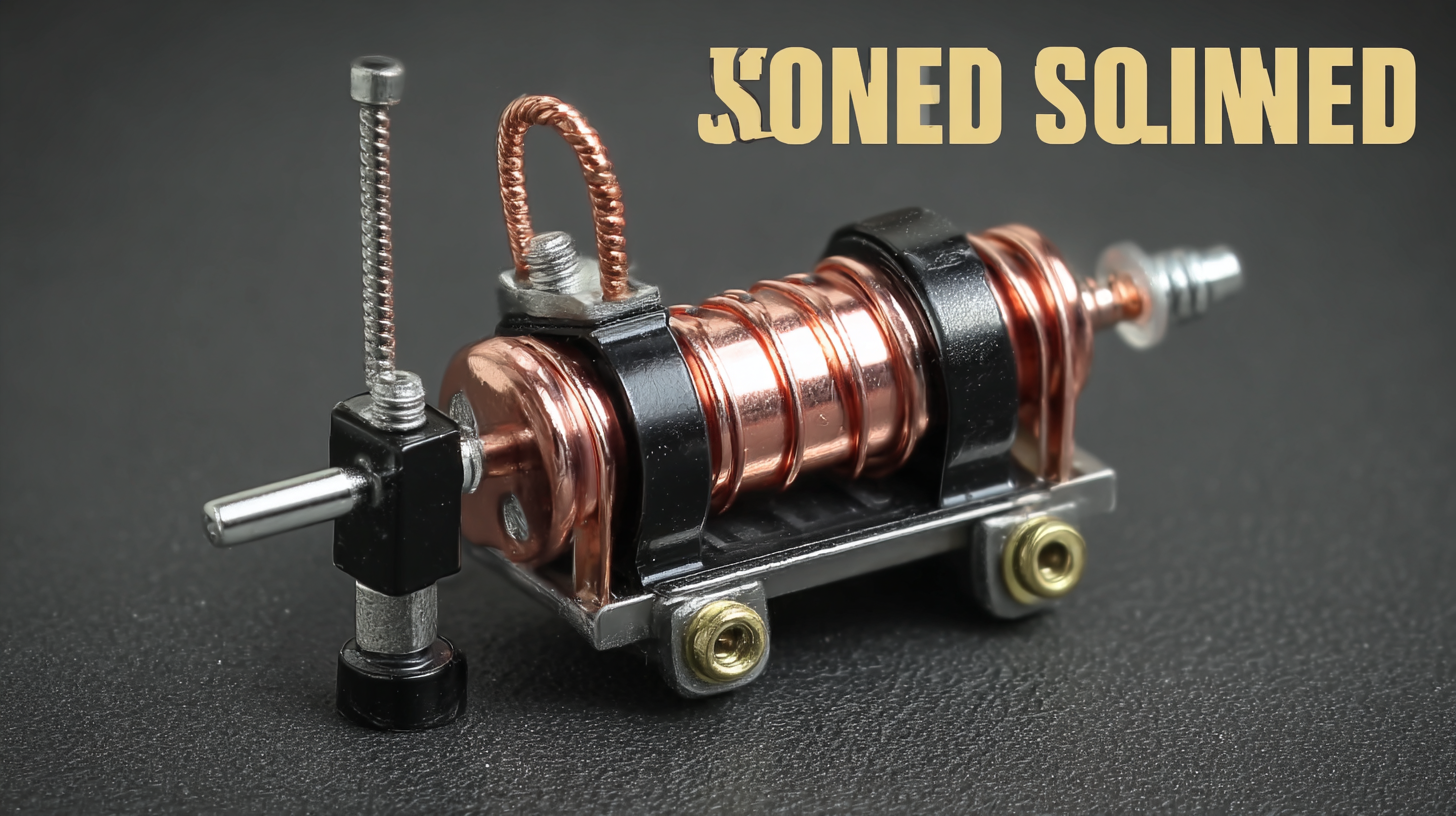
When you start looking at what really makes quality mini solenoids tick for today’s applications, there are a few key things you just can’t overlook. First off, let’s talk about the materials. The stuff that goes into making these little solenoids can really make a difference in how long they last and how well they perform. I mean, using high-grade materials like stainless steel and strong plastics is super important. They hold up against all sorts of environmental challenges and resist rusting, which is a big deal if you want them to last in different situations. And then there’s the whole coil winding process. It’s not just a detail; it actually affects how efficient the solenoid is and how quickly it responds. So, teaming up with manufacturers who really pay attention to these details is crucial.
Another thing to think about when judging quality is the power consumption and response time of these mini solenoids. You want them to give you the best performance without guzzling energy, especially for battery-operated gadgets or anything with tight power constraints. And let’s be honest, having a fast response time is key for stuff that needs precise control, like robotics and automation systems. So, checking out both the electrical specs and how they’re designed mechanically can really help you figure out if a mini solenoid is up to snuff with the demands of modern tech.
You know, mini solenoids really are a game changer when it comes to boosting efficiency and reliability in automation. Their small size packs a punch, making them perfect for tasks that need precise movement and control. In places like assembly lines, robotics, and automated machines, these little guys speed things up while keeping everything accurate. And let’s be honest, when operations run smoother and quicker, it cuts down on production time and kicks human error to the curb, which is a win for everyone involved.
But here’s the real kicker: the reliability of mini solenoids is a huge reason why so many people are jumping on the automation bandwagon. Unlike the old-school mechanical parts, mini solenoids deliver consistent and repeatable actions, which is super important for keeping things on track. They can handle all sorts of conditions without breaking down too soon, so manufacturers really love them for keeping productivity high. As more industries lean into automation, investing in some quality mini solenoids is becoming a must to ensure that automated systems run smoothly and last longer.
So, if you're on the hunt for the best mini solenoid for your projects, there are a few key specs you really should keep in mind to get the best performance out of it. First off, let's talk about the voltage rating. Mini solenoids usually come in different voltages like 5V, 12V, or even 24V. It's super important to pick the right voltage because it has a big impact on how fast the solenoid can actuate and how efficient it is overall. Higher voltages can give you quicker response times, while lower voltages might be just fine for tasks that don’t need as much oomph.
Next up, you’ve got to check the pulling force of the solenoid. This is usually measured in pounds or newtons and tells you how much weight the solenoid can handle. Depending on what your project needs—whether it’s locking a door, controlling a valve, or just triggering some device—the pulling force is key to ensuring the mini solenoid can actually do the job. And hey, don’t forget about the duty cycle! This one indicates how long the solenoid can run before it needs to cool off. A solenoid with a higher duty cycle can keep going longer, which is perfect for projects that need something to be running continuously. So yeah, having a handle on these specifications will definitely help you select the right mini solenoid for your project needs. You’ll be glad you did!
| Specification | Value |
|---|---|
| Coil Voltage | 12V DC |
| Current Rating | 0.3 A |
| Stroke Length | 10 mm |
| Operating Temperature Range | -10 to 50°C |
| Duty Cycle | 60% |
| Mounting Type | Panel Mount |
| Material | Stainless Steel |
| Weight | 50 g |
You know, lately, the mini solenoid market’s been really booming, and a lot of that has to do with some awesome innovations coming out of China. A fresh report from Markets and Markets suggests that the global solenoid market might hit around USD 2.7 billion by 2026. And get this: a big chunk of that growth is all about mini solenoid devices. These little guys have become pretty essential for all sorts of things—think automotive systems, medical devices, and even our everyday gadgets. The push for making things smaller has really motivated manufacturers in China to step up their game, leading to solenoids that are not just compact but also more efficient and reliable.
It's interesting to see how Chinese manufacturers are jumping on the latest tech, using stuff like automated assembly and precision engineering to really boost their product quality. A recent report from Research and Markets highlights how breakthroughs in materials science and smart manufacturing techniques have paved the way for super high-performance mini solenoids. They’re now using less power while still packing a punch in terms of performance! This is huge because it means businesses all over the world can pick solenoid solutions that fit right into their sustainability goals. It just cements China's reputation as a top supplier in the global market. Plus, with the rising demand for smarter devices, we should expect some exciting developments in mini solenoid technology. These components are definitely going to play a big role in shaping the future of electronics!
In today's diverse industrial landscape, mini solenoids are pivotal components employed across various applications, from automotive systems to IoT devices. According to a recent market analysis by Research and Markets, the global solenoid market is projected to reach USD 3.2 billion by 2027, with mini solenoids playing a crucial role due to their compact size and efficiency. Industries such as medical technology utilize mini solenoids for precise actuation in devices like infusion pumps, while in robotics, they serve as reliable switches that enhance automation processes.
When selecting the best mini solenoid for your project, consider factors like power consumption and actuation speed. Opting for solenoids with low energy requirements can improve the overall efficiency of your system. Furthermore, testing the product in real-world conditions can help you gauge performance under different loads.
Tip: Always check the solenoid's duty cycle, as this indicates the time it can operate before needing a cooldown period. Choosing a solenoid with an appropriate duty cycle ensures reliability and longevity, especially in high-usage environments. Additionally, ensure compatibility with your voltage requirements to maximize efficiency and performance.
You know, as technology keeps moving forward, mini solenoids are becoming pretty crucial in a lot of different areas. These little electromagnetic gadgets work wonders by turning electrical energy into linear motion, which makes them super important for things like robotics, automation, and even smart home solutions! I mean, the demand for these advanced mini solenoids is really picking up because everyone wants efficient, reliable, and compact components that can work well in all sorts of places. With all these Internet of Things (IoT) devices popping up, it’s cool to see mini solenoids being built into everyday products; it really boosts their functionality and the user experience.
Looking to the future, I think there’s a lot to be excited about when it comes to advanced mini solenoids. Thanks to new materials and design innovations, they’re getting better in terms of performance and durability, making them great for high-demand spots like automotive systems and medical devices. Plus, with companies trying to be more sustainable, mini solenoids that use less power but still pack a punch in efficiency are going to be key. Their ability to adapt to new tech is pretty impressive and will lead to even more uses, ensuring these small but mighty devices keep playing a major role in shaping the landscape of smart technology and automation.
: Mini solenoids are compact electromagnetic devices used to convert electrical energy into linear motion. They are commonly used in industrial automation, assembly lines, robotics, automotive systems, medical devices, and consumer electronics.
Mini solenoids enhance automation efficiency by enabling faster and more precise operations, reducing production time, and minimizing the risk of human error.
Mini solenoids offer consistent and repeatable actions, function well under various conditions, and experience less wear and tear, which contributes to their reliability in automation projects.
The growth is driven by innovations in manufacturing techniques and materials science in China, leading to the production of smaller, more efficient, and reliable mini solenoids.
Technologies such as automated assembly and precision engineering are being adopted by manufacturers to improve product quality and performance.
Mini solenoids are increasingly being integrated into smart home solutions and IoT devices, enhancing functionality and user experience due to their efficient and space-saving design.
The future is promising for mini solenoids, as innovations in materials and design will lead to improved performance, power efficiency, and adaptability in various high-demand applications.
Mini solenoids that consume less power while maintaining high efficiency are essential for industries striving for sustainability, allowing for robust performance in an environmentally-friendly manner.
Sectors such as automotive systems, medical devices, and automation will benefit from advanced mini solenoid technology due to the demand for efficient and reliable components.
By providing precise control and reducing the likelihood of human error, mini solenoids enhance the overall performance and reliability of automated systems in industrial applications.